Harness the healing power of creative expression through evidence-based art therapy, journaling, music, and movement—accessing emotions and trauma that words alone cannot reach.
Learn research-backed expressive arts therapy from board-certified psychiatric nurse practitioner Autumn Persinger, PMHNP-BC. Master Pennebaker's expressive writing paradigm for trauma processing, art therapy techniques for anxiety and depression, music therapy for emotional regulation, and dance/movement therapy for embodied healing. Discover how creativity activates 600+ biological mechanisms (Lancet Psychiatry 2020) to transform mental health through visual arts, writing, music, and movement.
Special Pricing - Until Jan 1, 2026
One-time payment • Lifetime access
Or access all courses with Platform Subscription at $19.95/month
Enroll Now Learn MoreCreative expression operates through powerful neurobiological mechanisms that make it uniquely effective for mental health healing—particularly for processing trauma and emotions that resist verbal articulation. A groundbreaking 2020 review published in Lancet Psychiatry identified over 600 distinct biological pathways through which creative engagement improves mental health, spanning neurotransmitter regulation, stress hormone modulation, immune system function, and neural network integration. Art therapy activates the default mode network (involved in self-reflection and emotional processing) while simultaneously engaging focused attention, creating meditation-like states that promote integration between the emotional limbic system and rational prefrontal cortex. This bilateral brain stimulation during creative activities mirrors the mechanisms of EMDR therapy, helping integrate traumatic memories and overwhelming emotions without requiring explicit verbal narration of the trauma.
Dr. James Pennebaker's pioneering research at the University of Texas established expressive writing as a powerful intervention for trauma processing and emotional regulation. His landmark studies, published across three decades in journals including Journal of Experimental Psychology and Psychosomatic Medicine, demonstrate that just 15-20 minutes of expressive writing about traumatic or emotionally difficult experiences for 3-4 consecutive days produces measurable improvements in immune function (T-lymphocyte response), reduces physician visits by 43%, decreases depression and anxiety symptoms, improves working memory and academic performance, and facilitates faster physical wound healing. Pennebaker's work revealed that the act of constructing a coherent narrative from fragmented traumatic memories—giving language and structure to overwhelming emotional experiences—fundamentally reorganizes how trauma is stored in the brain, reducing its physiological and psychological impact.
This comprehensive course provides evidence-based training in multiple creative modalities proven effective for mental health treatment: visual arts therapy (drawing, painting, collage, sculpture, mixed media), expressive writing and journaling (Pennebaker's paradigm, narrative therapy, poetry), music therapy (listening, creation, improvisation for mood regulation), and dance/movement therapy (embodied processing, somatic healing). You'll learn the neuroscience behind why creativity heals—including how art-making reduces cortisol by 25% within 45 minutes regardless of artistic skill, increases dopamine and serotonin naturally, activates the parasympathetic nervous system for stress reduction, and creates new neural pathways for emotional regulation. The course covers trauma-informed approaches that emphasize safety, choice, and pacing, ensuring creative expression supports healing without re-traumatization.
You'll master color psychology for intentional mood regulation (understanding how blues calm anxiety while warm colors energize), symbolism and metaphor in creative work (Carl Jung's active imagination and archetypal imagery), and how to interpret your own creative expressions for self-discovery and insight. Created by board-certified psychiatric mental health nurse practitioner Autumn Persinger, PMHNP-BC, with extensive clinical experience integrating expressive arts into mental health treatment, this course translates complex research into practical, accessible techniques you can use immediately. Whether you're seeking alternative approaches to traditional talk therapy, healing from trauma that's difficult to verbalize, looking for creative outlets for anxiety and depression management, or simply want to harness creativity's profound mental health benefits, this course provides both the scientific foundation and practical skills to use expressive arts as powerful medicine for emotional wellbeing.
This course is built on peer-reviewed research from leading institutions and published studies in top-tier medical and psychological journals:
Published in one of psychiatry's most prestigious journals, this systematic review analyzed over 900 publications examining relationships between creative engagement and mental health outcomes. Researchers identified more than 600 distinct biological, psychological, and social mechanisms through which creative activities improve mental wellbeing, including neurotransmitter regulation (dopamine, serotonin, endorphins), stress hormone modulation (cortisol reduction), immune system enhancement, social connection and belonging, emotional regulation and expression, meaning-making and identity formation, and neuroplasticity and cognitive flexibility. The review concluded that creative arts should be integrated into mainstream mental health treatment based on this extensive evidence base.
Dr. James Pennebaker's groundbreaking research at the University of Texas, spanning over three decades and published in journals including Journal of Experimental Psychology, Psychosomatic Medicine, and American Psychologist, established expressive writing as an evidence-based intervention for trauma processing. His studies demonstrate that 15-20 minutes of writing about traumatic or deeply emotional experiences for 3-4 consecutive days produces remarkable outcomes: 43% reduction in physician visits over six months, enhanced immune function measured by T-lymphocyte response, significant decreases in depression and PTSD symptoms, improved working memory and academic/work performance, faster physical wound healing, reduced blood pressure and heart rate, and better sleep quality. The mechanism works by helping individuals construct coherent narratives from fragmented traumatic memories, facilitating cognitive processing and reducing the physiological burden of suppressed emotions.
Meta-analyses published in The Arts in Psychotherapy and Journal of the American Art Therapy Association consistently demonstrate moderate-to-large effect sizes for art therapy in treating depression (effect size 0.58-0.72), anxiety disorders (0.49-0.65), PTSD and trauma (0.61-0.77), and chronic stress (0.52-0.68). A 2018 randomized controlled trial found that 45 minutes of art-making significantly reduced cortisol levels by 25% regardless of artistic experience or skill level. Brain imaging studies using fMRI show that creative engagement activates the default mode network (self-reflection, emotional processing) while simultaneously engaging task-positive networks (focused attention), creating unique neural integration patterns that facilitate emotional regulation and trauma processing.
Studies from the American Music Therapy Association and published in Journal of Music Therapy demonstrate that music engagement—both active (playing, singing, improvising) and receptive (listening)—produces measurable mental health improvements through multiple mechanisms. Music synchronizes neural oscillations across brain regions, enhancing connectivity between emotional and cognitive networks. It triggers dopamine release in the nucleus accumbens (reward center), reduces amygdala reactivity to stress, and entrains heart rate variability and breathing patterns to promote parasympathetic activation. Clinical trials show music therapy effectively reduces anxiety (40% symptom reduction), improves mood in depression, enhances emotional expression in trauma survivors, and provides safe containers for exploring difficult emotions.
Research published in American Journal of Dance Therapy and Body, Movement and Dance in Psychotherapy establishes dance and movement therapy as effective interventions for trauma, particularly for processing emotions and memories stored somatically (in the body) rather than verbally. DMT works by accessing the body's implicit memory systems where trauma is often encoded below conscious awareness. Studies show DMT significantly reduces PTSD symptoms, decreases dissociation, improves body awareness and interoception (sensing internal states), enhances emotional regulation, and increases stress resilience. The bilateral movement patterns in many dance forms mirror EMDR therapy mechanisms, facilitating neural integration and trauma processing.
Research from Johns Hopkins University and published in NeuroImage using fMRI demonstrates that creative engagement produces flow states characterized by reduced activity in the dorsolateral prefrontal cortex (self-monitoring, critical judgment) while maintaining activity in medial prefrontal regions (self-expression, emotional processing). This neural signature creates optimal conditions for emotional exploration without harsh self-criticism—particularly valuable for individuals with perfectionism, shame, or self-judgment that impedes verbal therapy. Flow states during creative activities also increase endogenous opioid and endocannabinoid release, producing natural mood elevation and stress reduction.
The American Art Therapy Association, American Music Therapy Association, American Dance Therapy Association, and National Coalition of Creative Arts Therapies Associations all maintain evidence-based practice guidelines. The World Health Organization's 2019 report identified creative arts interventions as effective treatments for mental health conditions based on analysis of over 3,000 studies.
Absolutely not—and this is one of the most important findings from art therapy research. A landmark 2018 study published in Art Therapy: Journal of the American Art Therapy Association measured cortisol levels (stress hormone) before and after 45 minutes of art-making in 39 adults. The results were remarkable: 75% of participants showed significant cortisol reduction (average 25% decrease) regardless of their artistic skill level or prior creative experience. The therapeutic benefits of creative expression are completely independent of artistic ability.
This course emphasizes process over product—meaning the healing happens in the act of creating, not in the final aesthetic result. We're not evaluating your work for galleries or art shows; we're using creative expression as a tool to access emotions, process trauma, regulate mood, and explore your inner world. In fact, sometimes the "messier" or less refined creative work provides the most therapeutic value because it bypasses the perfectionism and self-judgment that can block emotional expression.
Think of creative expression like going for a walk to clear your mind—you don't need to be an Olympic athlete to benefit from movement, and you don't need to be a professional artist to benefit from creativity. The course teaches simple, accessible techniques that anyone can use regardless of background:
Many participants find that releasing the pressure of creating "good art" actually frees them to experience creativity's profound mental health benefits for the first time. This course will help you discover that you're more creative than you think—and that creativity is a natural human capacity, not a special talent reserved for artists.
Creative expression works through multiple powerful mechanisms simultaneously—the 2020 Lancet Psychiatry review identified over 600 distinct pathways. Here are the key mechanisms:
Neurobiological mechanisms:
Psychological mechanisms:
The course teaches you how to harness these mechanisms intentionally—using different creative modalities strategically based on what you need (calming anxiety, processing trauma, lifting depression, exploring identity, etc.).
Dr. James Pennebaker's three decades of research established expressive writing as one of the most well-documented interventions for trauma processing. His studies show that writing about traumatic or deeply emotional experiences for just 15-20 minutes per day for 3-4 consecutive days produces measurable improvements in both psychological and physical health—including 43% fewer physician visits, enhanced immune function, reduced depression and PTSD symptoms, improved sleep, and better work/academic performance.
How it works: Trauma is often stored in the brain as fragmented sensory and emotional memories without coherent narrative structure. This fragmentation is part of what makes trauma so distressing—your brain can't "file" the experience properly, so it keeps intruding as flashbacks, nightmares, or overwhelming emotions. Expressive writing helps you construct a coherent narrative from these fragments, organizing the experience in a way your brain can process and integrate. This narrative construction literally reorganizes how trauma is stored neurologically, reducing its emotional charge and intrusive symptoms.
Is it safe? For most people, yes—but with important caveats:
Many participants find expressive writing more accessible than verbal therapy because it offers privacy, control over pacing, and the ability to process at your own speed without the vulnerability of face-to-face disclosure. The course teaches you Pennebaker's specific protocols as well as variations for different mental health needs.
Different creative modalities work through distinct mechanisms and are suited for different therapeutic goals. The course teaches all four major modalities so you can discover what resonates with you and match techniques to specific needs:
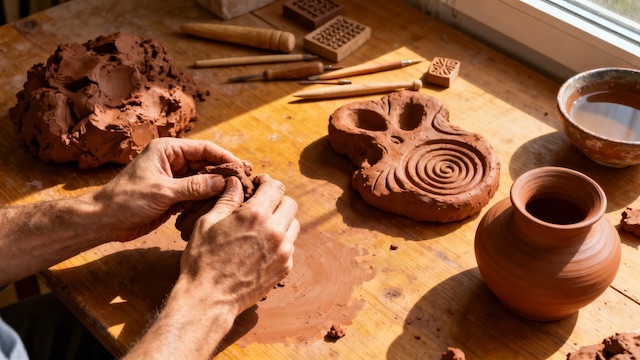
Visual Arts (Drawing, Painting, Collage, Sculpture):
Expressive Writing/Journaling:
Music Therapy (Listening, Creating, Improvising):
Dance/Movement Therapy:
Most people benefit from combining multiple modalities rather than choosing just one. The course includes assessments to help you identify which approaches resonate most with your learning style, emotional needs, and healing goals. You'll also learn to match specific techniques to different situations—perhaps journaling for cognitive processing, art for accessing unconscious material, music for immediate mood regulation, and movement for grounding and embodiment.
Yes—meta-analyses show moderate-to-large effect sizes for creative interventions in treating both anxiety disorders (effect size 0.49-0.65) and depression (0.58-0.72), comparable to established psychological treatments. The course teaches condition-specific applications:
For Anxiety Disorders:
For Depression:
The course includes specific protocols, worksheets, and guided exercises for using each creative modality to target anxiety and depression symptoms. You'll learn to track which techniques work best for your specific symptom patterns and how to build sustainable creative practices into your daily life for ongoing mental health maintenance.
This is one of the most common barriers to incorporating creative expression into mental health routines—and the course addresses it directly with practical, realistic strategies for busy lives.
Start ridiculously small: Pennebaker's expressive writing protocol is just 15-20 minutes for 3-4 days—not a daily lifelong commitment. Art therapy research shows benefits from 45-minute sessions once or twice weekly, not hours every day. Even 5-10 minutes of creative engagement (doodling during a phone call, journaling before bed, listening to music intentionally) provides measurable mental health benefits. The course teaches micro-practices that fit into existing routines.
Reframe it as essential self-care, not luxury: If creative expression reduces your anxiety, processes your trauma, or lifts your depression, it's not an optional extra—it's treatment. You wouldn't skip taking prescribed medication because you're "too busy." Similarly, therapeutic creative practices deserve protection in your schedule as mental health necessities, not indulgences.
Integrate creativity into existing activities:
Low-barrier, minimal-prep options: The course emphasizes accessible techniques that don't require elaborate setups or special spaces:
Quality over quantity: Fifteen focused minutes of expressive writing is more therapeutic than an hour of distracted, perfectionistic art-making. The course teaches you to make your limited creative time maximally effective through intentional, trauma-informed approaches.
Many participants find that creative expression actually creates time by reducing anxiety-driven rumination, improving sleep efficiency, decreasing time spent in mental health crises, and increasing focus and productivity. A 10-minute morning journaling practice that prevents an afternoon anxiety spiral has actually saved you time. The course includes detailed time-management strategies and troubleshooting for common obstacles to building sustainable creative practices.
Real Psychiatric Services
4770 Indianola Ave., Suite 111
Columbus, OH 43214
614-427-3205
Mon-Fri: 9am-5pm
If experiencing a crisis, call 988 for immediate support.
Join thousands learning evidence-based mental health strategies
Start Course Now